Source Adjustable Free Standing Walking Cane for Indoor, Outdoor, and Travel
Compare 30 adjustable free standing walking cane options from verified Chinese manufacturers. Buyers can evaluate features like foldable designs, aluminum alloy shafts, and customizable logos to find suitable mobility aids for daily use.
Key considerations
Products List




Comprehensive Sourcing Guide
Adjustable Free Standing Walking Cane Sourcing Guide
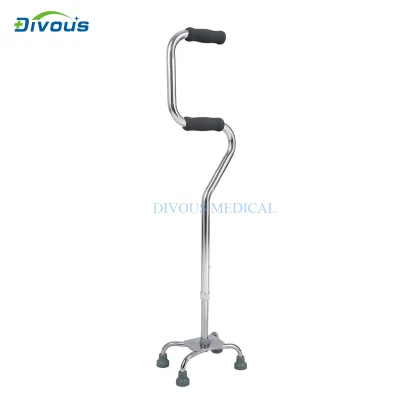
Procuring adjustable free standing walking canes requires a nuanced understanding of the intersection between mobility aids and assistive technology. These devices are designed to provide stability for users who require support while standing or walking, often featuring a base that prevents tipping and a shaft that can be modified to fit various user heights. The market for these products is diverse, ranging from simple manual canes to more complex units with additional features like seats or storage. Buyers must navigate a landscape where product definitions can overlap, distinguishing between standard single-point canes, multi-foot canes, and those specifically engineered for free-standing stability.
The sourcing process is heavily influenced by the specific needs of the end-user, whether for medical rehabilitation, elderly care, or general mobility assistance. Suppliers often offer customization options, including logo printing and packaging adjustments, which are critical for private label brands and healthcare distributors. Understanding the material composition, such as aluminum alloy shafts and ABS+rubber handles, is essential for ensuring durability and user comfort. Furthermore, the ability to adjust the height of the cane is a primary feature that buyers must verify, as it directly impacts the ergonomic fit and safety of the device for different user demographics.
Product Scope and Observed Listing Signals
The current market for adjustable free standing walking canes presents a wide variety of product types, including single-foot canes, multi-foot canes, and general crutch-style devices. Observed listings indicate that products are categorized under various types, such as "Cane," "Crutch," and specific models like "Single Foot Cane" or "Multi-Foot Cane." This diversity suggests that buyers should carefully review product descriptions to ensure the item meets the specific stability requirements of their target audience. Some products are explicitly labeled as "crutches," while others are marketed as "canes," which may imply differences in weight-bearing capacity and usage scenarios.
Price points for these devices vary significantly, with observed ranges extending from low-cost options to higher-end specialized units. The minimum order quantities (MOQ) also fluctuate, ranging from small batches suitable for sampling to large volumes for mass distribution. Buyers should note that some suppliers offer customization services, allowing for branded packaging and logo placement, which is a key consideration for businesses looking to establish a distinct brand identity. The condition of the products is consistently listed as "New," indicating that the market is focused on fresh inventory rather than refurbished or second-hand goods.
Technical Specifications to Verify
When evaluating technical specifications, the material composition of the cane is a primary factor in determining durability and weight. Aluminum alloy is a common material for the shaft, offering a balance of strength and lightweight portability. The handle material is often a combination of ABS plastic and rubber, designed to provide a secure and comfortable grip. Buyers should verify the specific dimensions of the product, including the overall length and the adjustable height range, to ensure it accommodates the intended user base. Some listings specify a length range of 72-95cm, while others indicate an adjustable height of 74-97cm, highlighting the need for precise measurement verification.
Packaging and shipping dimensions are critical for logistics planning and cost estimation. Products are typically packed in standard export brown carton boxes, with specific package sizes noted in various listings. For instance, some packages measure 78x29x36cm, while others are smaller, such as 30.5x18x9.2 cm. The net weight of individual units can vary, with some listings indicating a weight of 0.76kg, while others report a single gross weight of 9.000 kg, which may include packaging or multiple units per box. Buyers must clarify whether the weight refers to a single item or a carton to avoid miscalculations in shipping costs.
Compliance and Safety Documentation
Compliance with international standards is essential for selling mobility aids in regulated markets. Certifications such as CE and ISO are frequently mentioned in product listings, indicating that the manufacturer adheres to specific quality and safety management systems. Some suppliers also list FDA certification, which is particularly important for products marketed in the United States. Buyers should request copies of these certificates to verify their validity and ensure they cover the specific models being procured. It is crucial to confirm that the certifications are current and applicable to the product's intended use and region of sale.
Safety features and design standards are another key area of verification. The "Durable" frame attribute suggests a focus on structural integrity, but buyers should inquire about specific load-bearing tests and stability assessments. The "Foldable" feature is a common attribute, but the mechanism for folding and locking should be evaluated for reliability. Additionally, the "Adjustable" nature of the height mechanism must be secure to prevent accidental changes during use. Buyers should ask for detailed product standards documentation, such as the "78x29x36(package)" standard mentioned in some listings, to understand the manufacturing benchmarks.
Cost Drivers and Commercial Terms
Several factors influence the final cost of adjustable free standing walking canes, including material costs, customization requirements, and order volume. Aluminum alloy and ABS+rubber components are standard, but the quality grade of these materials can affect pricing. Customization options, such as adding a customized logo to the carry bag or handle, may incur additional setup fees or higher per-unit costs. Buyers should negotiate clear terms regarding these customization charges to avoid unexpected expenses. The MOQ is a significant driver, with lower quantities often resulting in higher per-unit prices.
Warranty and after-sales support are important commercial terms that can impact the total cost of ownership. A standard warranty period of 12 months is commonly offered, but buyers should clarify the scope of coverage, including what constitutes valid warranty claims. The origin of the product, often listed as China or specific provinces like Guangdong or Hebei, can also influence pricing due to differences in labor and manufacturing costs. Buyers should compare quotes from multiple suppliers, considering not just the unit price but also shipping costs, payment terms, and potential tariffs.
Supplier Qualification and Quality Control
Supplier qualification is a critical step in ensuring the reliability of the supply chain. Buyers should verify the supplier's business license, manufacturing capabilities, and export experience. The presence of certifications like ISO and CE is a positive indicator, but direct verification with the issuing body is recommended. Suppliers with a long history in the mobility aid industry are likely to have more refined production processes and quality control measures. Buyers should request references or case studies from previous clients to assess the supplier's track record.
Quality control procedures should be clearly defined and agreed upon before placing orders. This includes pre-production samples, in-process inspections, and final random inspections. Buyers should specify the acceptable quality limit (AQL) for defects, such as scratches, functional issues, or packaging errors. The "Standard Export Brown Carton Box" packaging should be inspected for durability to prevent damage during transit. Suppliers should provide a detailed quality control plan, including how they handle non-conforming products and the process for returns or replacements.
Long-Term Procurement Checks
Long-term procurement success depends on continuous monitoring of supplier performance and market trends. Buyers should establish key performance indicators (KPIs) for delivery times, product quality, and customer service. Regular audits, either on-site or virtual, can help ensure that the supplier maintains consistent quality standards. Feedback from end-users should be collected and shared with the supplier to drive product improvements. This collaborative approach can lead to better product designs and enhanced user satisfaction.
Market dynamics and regulatory changes can impact the procurement strategy over time. Buyers should stay informed about new certifications, safety standards, and consumer preferences in the mobility aid sector. Diversifying the supplier base can mitigate risks associated with single-source dependencies. Building strong relationships with suppliers can lead to better pricing, priority production, and access to new product innovations. Regular review of contracts and commercial terms ensures that they remain competitive and aligned with business objectives.
FAQs
What certifications do the adjustable free standing walking canes have?
The products hold CE and ISO certifications, ensuring compliance with international safety standards. Some models also feature FDA certification, providing additional assurance for medical-grade equipment used in various healthcare settings.
Can I customize the logo on the carrying bag for these canes?
Yes, customization is available for the carrying bag with a custom logo option. Buyers can request specific branding details, though some models may be listed as non-customized depending on the specific product configuration selected.
What materials are used to construct the shaft and handle?
The shaft is made from durable aluminum alloy, while the handle combines ABS plastic with rubber for grip. This material selection ensures the cane is lightweight yet sturdy enough for both indoor and outdoor usage environments.
How does the height adjust on these single foot canes?
The height is adjustable, typically ranging from 72 to 95 centimeters for the shaft and 74 to 97 centimeters overall. This feature allows users to find the perfect fit for their specific height requirements and comfort needs.
What is the warranty period for the durable frame construction?
The product comes with a 12-month warranty covering the durable frame construction. This guarantee protects buyers against manufacturing defects and ensures long-term reliability for the aluminum alloy structure used in the design.
Which packaging standard is used for shipping these walking canes?
Items are packed in standard export brown carton boxes with specific dimensions like 78x29x36 cm. Each carton typically holds 10 pieces, ensuring safe transport and efficient logistics for bulk orders from the factory.